Kids’ Room Ideas Checklist: Design, Safety, and Style in One Guide
Designing a child’s room goes beyond choosing cute furniture; it balances style, safety, and functionality. This kids’ room ideas checklist covers decor themes, layout tips, storage, and safety advice for parents. It offers imaginative colours and adaptable furniture to create a beautiful, practical, and safe space your child will love.

Kids’ Room Ideas Checklist: Getting Started with Practical Planning
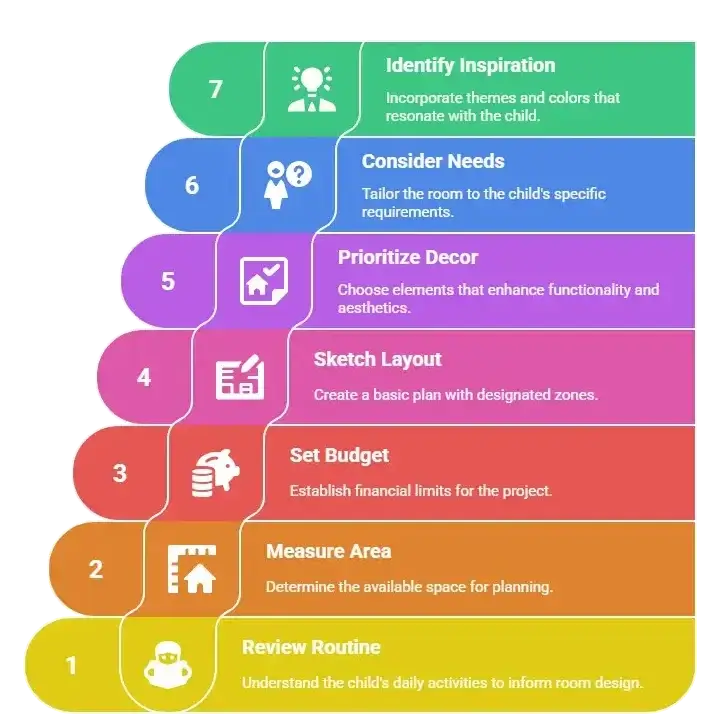
A well-designed kids’ room blends excitement, creativity, and order. When planning kids’ room ideas, I start by reviewing the child’s routine: do they need space for studying, reading, or creative play? Measure the available area, set a budget, and sketch a simple layout with zones for sleeping, storage, and activities.
This step helps prioritise kids’ room decor by making thoughtful decisions, such as choosing furniture. Consider practical needs: Is it a girl’s, a boy’s, or shared space? Identify what inspires your child – vibrant colours, whimsical themes, or favourite characters – to make their room functional and personal.
Safety-First Kids’ Room Decor: Essentials for Every Age
Safety underpins all kids’ room decor. Secure heavy furniture, use soft, rounded edges. Install window guards, outlet covers, and cord wraps to prevent accidents. Use non-toxic paints and washable surfaces for health safety.
Older kids and teens benefit from safe electrical setups for laptops and lamps. Whether creating a playroom or a sleep-friendly space, include safety guidelines. A secure room allows children to explore freely and reassures parents.
Clever Storage Solutions for Kids’ Bedroom Ideas
Organisation fosters creativity and calm in kids’ rooms by sectioning items by activity—books in reading nooks, art supplies in labelled bins, toys in baskets for independent play.
Multipurpose kids’ room furniture like ottomans with hidden storage or beds with drawers maximise limited space. Vertical shelving and under-bed bins organise items, while playful colours and personalised labels encourage your child’s ownership of tidiness.
For boys’ and girls’ room ideas, adapt storage to their hobbies and interests so solutions feel personalised, not generic..
Age-Appropriate Zones: Learning, Play, and Sleep
A balanced approach to kids’ room ideas means creating distinct zones for your child’s activities. Reading nooks with comfy chairs, play tables for creativity, and sleeping areas with cosy bedding ensure smooth daily transitions.
For girls, craft stations or display boards promote artistic expression, while boys might prefer sports themes or building zones. Kid’s playroom ideas often overlap with bedrooms, so define spaces with purposeful decor, boundaries, and adaptable furniture. Zoning organises activities and fosters routines..
Durable, Washable Materials for Real-Life Living
Kids’ room decor should stand up to daily wear and tear. Opt for sturdy furniture, hypoallergenic textiles, and washable rugs or curtains. Low-VOC paints and easy-to-clean surfaces support healthy indoor air and hassle-free maintenance.
For active play or messy art projects, choose stain- and scuff-resistant materials to keep style and function. Use kids’ furniture made from sustainable or easy-care materials for lasting comfort. Durable decor for energetic boys or imaginative girls keeps the room fresh and welcoming at every stage.
Designing for Growth: Furniture That Adapts Over Time
Investing in adaptable kids’ room furniture pays off as your child matures. Convertible cribs become toddler beds, adjustable desks adapt to needs, and modular bookcases hold growing toy and book collections.
When exploring kids’ bedroom ideas, select pieces with flexible features—removable guardrails, expandable surfaces, or stackable components.
This strategy is vital for parents seeking long-term kids’ room ideas, saving money and reducing waste. As tastes shift—from princess to geometric designs or from cars to music—your child’s room stays comfortable and relevant.
Layered Lighting and Air Quality for Health & Comfort
Proper lighting enhances creativity and rest. Layered solutions—ambient ceiling lamps, focused desk lights, and soothing nightlights—address different functions in the room. For reading or art corners, opt for glare-free task lights; for sleep, dimmable options support healthy routines.
Pair these choices with strategies for good air quality, such as frequent ventilation and low-emission paints. Kids’ room decor that supports sleep and focus directly benefits your child’s well-being. Prioritising health helps their bedroom evolve from a playful space to a restful retreat.
Window, Cord, and Electrical Safety You Can’t Ignore
Loose cords, poorly covered outlets, and unprotected windows pose risks in kids’ spaces. Use cordless blinds, plug guards, and window locks to eliminate hazards. When updating a kid’s room decor, check for exposed wires or accessible sockets, especially near beds or desks.
Safety in kids’ rooms blends style and practicality to prevent accidents. Regularly review these elements as children grow; what suited a toddler may need updating for teens’ electronics or reading lamps.
Stylish Walls and Personal Touches That Spark Joy
Walls serve as canvases for creativity and memory. Peel-and-stick decals, rotating gallery displays, or framed artwork introduce colour and personality. Incorporating sentimental items, like name signs or memory boards, creates a space that reflects your child’s journey.
Kids’ bedroom ideas excel when family photos, quotes, or themes add life without clutter. For kids’ and boys’ rooms, wall decor should inspire and promote self-expression.
Small Space Kids’ Room Ideas: Layout Strategies That Work
Limited square footage demands inventive use of space. Bunk beds, vertical storage towers, and fold-down desks maximise floor area for play. Use light colours, mirrors, and smart lighting to visually enlarge a small room.
Utilise versatile kids’ furniture such as beds with drawers or foldable tables to optimise spaces for sleeping, studying, and hobbies. These solutions transform small areas into lively, functional play spaces.
Maintenance Made Simple: Safety Checks & Seasonal Refreshes
Regular maintenance ensures a kids’ room stays both stylish and safe. Conduct monthly safety inspections of furniture stability, outlets, and cords. Update toys and books seasonally to reduce clutter and rotate decor to reflect changing interests or needs.
Refresh textiles and paint as needed to maintain appearance and hygiene. A smart maintenance routine keeps kids’ rooms organised, lively, and secure year-round—adapting as children grow.
FAQ:
To visually enlarge a small kid’s room, maximise vertical space with wall-mounted shelves and use furniture with legs to open up the floor area. Opt for light, neutral colours on walls and introduce mirrors to reflect light and create the illusion of space. Multifunctional furniture, such as loft beds or ottomans with storage, helps keep the room tidy and spacious.
Use under-bed drawers, baskets, and wall-mounted shelves for daily organisation. Implement a toy rotation system: store some toys in bins or closets and swap them out regularly. This method minimises clutter and reignites kids’ interest in old favourites while keeping the play area fresh and manageable.
Start by creating distinct zones for sleep, learning, and play. Let your child choose themes, colours, or DIY decorations for each area. Use easily replaceable accessories—such as posters, pillowcases, and gallery walls—so you can update and refresh the room without major renovations. Monthly edits to artwork and display boards help the room reflect your child’s evolving interests and hobbies.
Secure heavy items like dressers and TVs to the wall to prevent tip-overs. Install window stops to avoid falls, and use doorknob covers for added supervision. Choose anti-skid flooring, avoid glass or mirrors, and place soft materials in active play areas to cushion falls. Regularly check furniture for loose parts and repair as needed.
Engage in DIY projects using craft supplies or repurpose existing furniture—like painting old dressers or making handmade wall art. Shop for decor at thrift stores or consider secondhand items. Use colour-coded or labelled bins for organisation, and bring personality to the space with affordable textiles, such as unique curtains or themed bedding.